Build a Mobile Product With a Clear Business Role.
Core Conversion designs and develops customer-facing applications, operational tools, and digital products supported by the right product logic, backend architecture, integrations, analytics, and launch plan.
The objective is not simply to publish an app. It is to build a product people can use and the business can support.

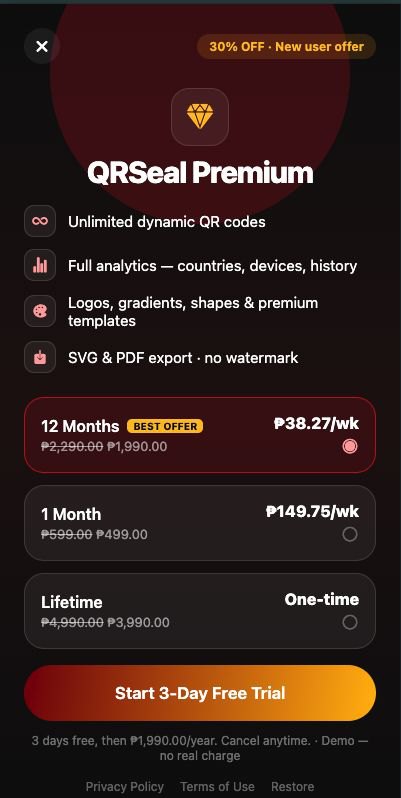
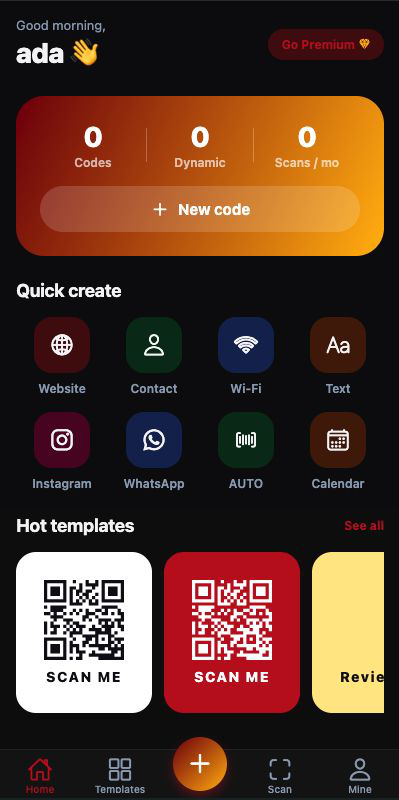
FIG. 01 — the visible screens are one layer of a complete product system.
Not Every Business Needs a Mobile App.
A mobile app is justified when it creates meaningful value that a normal website cannot provide as effectively.
An app earns its place when
- Recurring customer interaction
- Push notifications
- Location, camera, QR, or device features
- Offline access
- Customer accounts and saved activity
- Subscriptions or digital services
- Operational field use
- Staff workflows
- Marketplace or community behavior
- Loyalty and repeated transactions
- A software product sold to users
Consider a web platform instead when
- Users interact only occasionally
- The experience is primarily informational
- Discovery through search is the main need
- The budget cannot support maintenance
- No internal owner can support the product
- The use case is served well by a responsive website or progressive web app
Core Conversion will recommend a web solution when it creates a better commercial outcome than an app.
Development Should Begin After the Product Is Defined.
These questions define whether the first release should be a prototype, MVP, production application, or a web platform.
- 01 · Business Role
- What revenue, operational, customer, retention, or platform objective should the app support?
- 02 · Primary Users
- Who will use it, under what conditions, and how frequently?
- 03 · Core Job
- What recurring problem or task must the product solve well?
- 04 · Critical Journey
- What is the minimum path from opening the app to receiving value?
- 05 · Business Model
- Is the app a paid product, subscription, support channel, operational tool, lead source, marketplace, or companion to another service?
- 06 · Data and Integrations
- What accounts, payment systems, APIs, databases, dashboards, devices, or third-party platforms are required?
- 07 · Ownership and Operations
- Who will approve changes, support users, maintain content, resolve incidents, and fund continued improvement?
From Validation to Enterprise — Scoped by Journeys, Not Screens.
Product Validation
For early-stage ideas requiring definition before full development.
Possible outputs
- —Problem definition
- —User flows
- —Feature prioritization
- —Technical feasibility
- —Prototype
- —MVP scope
- —Delivery estimate
- —Risk register
MVP Development
For testing the core product with the smallest responsible production scope.
Possible outputs
- —Cross-platform application
- —Authentication
- —Core user journey
- —Basic backend
- —Analytics
- —Selected notifications
- —Admin capability
- —App-store submission
Growth Product
For products requiring payments, subscriptions, integrations, dashboards, more complex workflows, or expanded user roles.
Possible outputs
- —Payments and subscriptions
- —Deeper integrations
- —Expanded user roles
- —Dashboards
- —More complex workflows
Enterprise or Operational Application
For security-sensitive, multi-role, offline, device-integrated, high-volume, or business-critical systems requiring deeper architecture and governance.
Possible outputs
- —Hardened security model
- —Multi-role permissions
- —Offline behavior
- —Device integration
- —High-volume architecture
- —Governance and audit
We do not market “unlimited screens.” Scope is based on user journeys, functionality, complexity, integrations, and quality requirements.
The App Is Only One Part of the Product.
A reliable mobile product may require backend services, data models, user permissions, administration, integrations, analytics, billing, support workflows, and release management. The proposal must define the complete system — not only the visible screens.
One Development Pipeline, From Discovery to Care.
- Stage 1
Product Discovery
Business case, users, journeys, feature priorities, platform decision, technical constraints, success criteria.
- Stage 2
Experience Design
Information architecture, flows, wireframes, interface system, prototype, accessibility, and approval.
- Stage 3
Technical Design
Architecture, data, APIs, integrations, security, environments, release plan, and risk.
- Stage 4
Development
Iterative implementation with defined milestones and review builds.
- Stage 5
Quality Assurance
Functional, device, responsive, performance, permission, error, analytics, and integration testing.
- Stage 6
Launch
Store assets, submission, production environment, monitoring, documentation, and launch coordination.
- Stage 7
Product Care
OS compatibility, defect resolution, monitoring, analytics review, security, and planned improvement.
Deliverables Across the Product Lifecycle.
Planning
PHASE 1- Product requirements
- Prioritized feature scope
- User flows
- Technical plan
- Delivery milestones
- Responsibilities
- Assumptions and exclusions
Design
PHASE 2- Interface direction
- Screen designs
- Component system
- Prototype where included
- Revision checkpoints
Development
PHASE 3- Application code
- Backend and database per scope
- Integrations
- Admin tools
- Analytics
- Environments
- Test builds
Launch
PHASE 4- App-store preparation and submission
- Production deployment
- Documentation
- Credentials and ownership plan
- Handover / training
- Support period
Source-code access, repositories, third-party accounts, paid licenses, store fees, hosting, maintenance, and intellectual-property ownership are specified contractually.
QR Seal — A Complete Product System, Built End to End.
- Business Problem & Product Role
- Premium brands needed QR touchpoints that strengthen identity and security — not generic black-and-white utilities. The mobile app is the “Key” in a dual-platform ecosystem; the web platform is the “Vault.”
- User Journey & Backend Capability
- Generate dynamic, brand-styled QR codes in seconds; edit destinations after printing; track scans, locations, and devices per code — powered by a custom API engine, server-side verification, and a subscription platform.
- Key Implementation Decisions & Status
- A synchronized app + web architecture with tamper-proof, server-verified codes — live as a working SaaS ecosystem with mobile and web execution.
Priced by the Product, Not the Screen Count.
Ranges for product validation, MVP, growth products, enterprise applications, and monthly product care are shared during discovery, once the product case and system requirements are understood.
What drives the investment
Questions Before You Commission a Product.
Core Conversion uses an appropriate cross-platform or native approach depending on functionality, performance, budget, timeline, and integration requirements.
Yes — but “MVP” means the minimum responsible product required to test the core value, not an incomplete or low-quality version of the full idea.
Store preparation and submission can be included. Approval remains controlled by Apple or Google, and Core Conversion cannot guarantee acceptance.
A care plan can cover compatibility, monitoring, defects, minor updates, and planned improvements. New features are scoped separately unless included.
Ownership, licensing, repositories, reusable components, third-party code, and payment obligations are defined in the contract.
Yes. A credible product partner should recommend a website, web application, or smaller validation exercise when that is commercially wiser.
Start With the Product Case — Not the Screen Count.
We will help clarify the user, business objective, required system, first-release scope, risks, and the most appropriate platform.